New to tarot? Learn the fundamentals of tarot cards, from the structure of the deck to performing your very first reading.
Tarot cards have been used for centuries as a tool for self-reflection, divination, and spiritual growth. Whether you've picked up your first deck or you're simply curious about what those 78 cards can reveal, this guide will walk you through everything you need to get started.
The Structure of a Tarot Deck
A standard tarot deck contains 78 cards, divided into two groups:
The Major Arcana (22 cards)
These are the "big picture" cards — they represent significant life events, spiritual lessons, and archetypal energies. Cards like The Fool, The High Priestess, The Tower, and The World carry deep symbolic meaning and often point to transformative moments.
The Minor Arcana (56 cards)
These cards deal with day-to-day events and are divided into four suits:
- •Cups: Emotions, relationships, intuition (Water element)
- •Pentacles: Material world, finances, career (Earth element)
- •Swords: Intellect, conflict, truth (Air element)
- •Wands: Creativity, passion, action (Fire element)
Each suit contains cards numbered Ace through 10, plus four court cards: Page, Knight, Queen, and King.
Choosing Your First Deck
There's a common myth that your first tarot deck must be gifted to you. While receiving a deck as a gift is a beautiful tradition, there is absolutely nothing wrong with choosing your own. In fact, selecting a deck that visually and intuitively resonates with you can strengthen your connection to the cards.
The Rider-Waite-Smith deck is the most popular starting point, with its rich symbolism and widely-referenced imagery. But modern decks come in countless styles — from minimalist to ornate, celestial to nature-themed. Choose what speaks to your soul.
Performing Your First Reading
Step 1: Set Your Space
Create a calm, sacred space. Light a candle or incense, and take a few deep breaths to center yourself. Some readers like to place a crystal nearby — amethyst and clear quartz are popular choices for enhancing intuition.
Step 2: Shuffle and Focus
Hold your deck and think about a question or area of your life you'd like insight on. Shuffle the cards in whatever way feels natural — there's no wrong way. When you feel ready, cut the deck or fan the cards and select them intuitively.
Step 3: Start with a Simple Spread
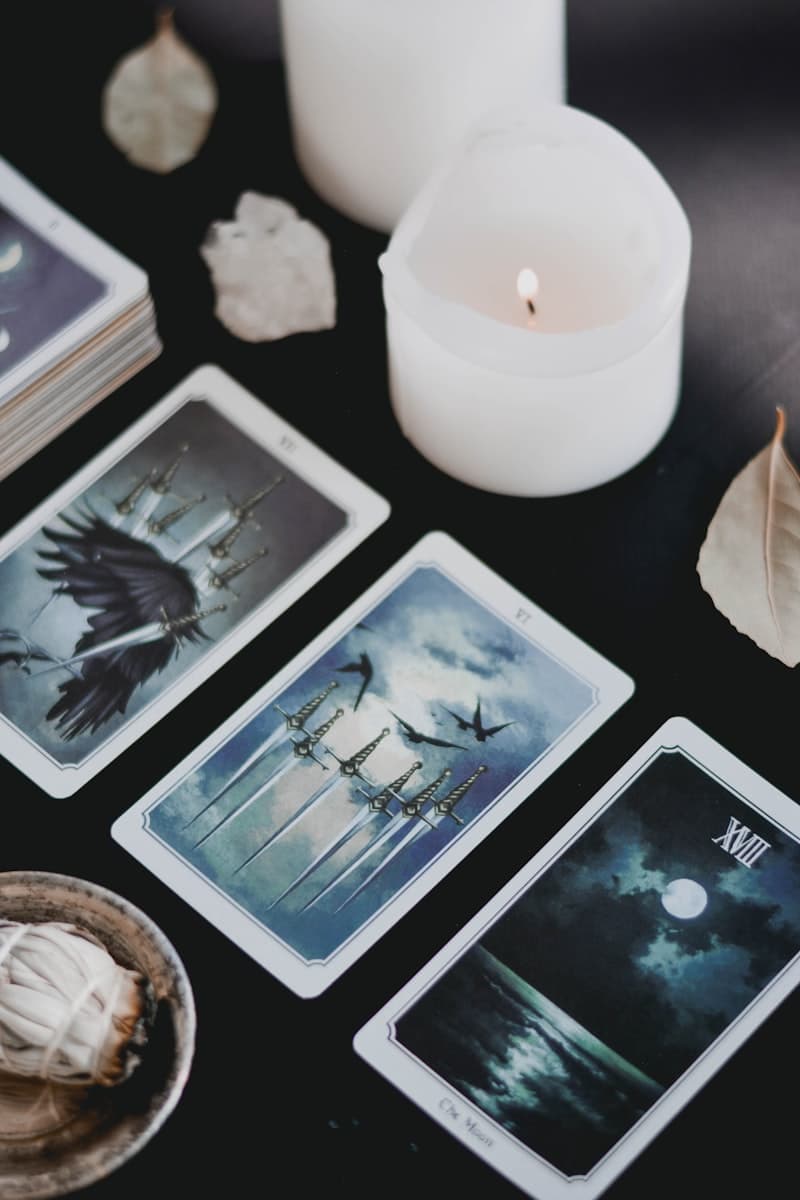
For beginners, try a three-card spread:
- •Past — What has led to this moment
- •Present — Your current situation or challenge
- •Future — The potential outcome or energy ahead
Step 4: Read with Intuition
Look at each card and notice what stands out: colors, symbols, figures, your emotional reaction. Then consult a guidebook or reference for traditional meanings. Over time, you'll develop your own relationship with each card's energy.
Common Myths About Tarot
- •"Tarot predicts the future" — Tarot reflects energies and possibilities, not fixed outcomes. The future is shaped by your choices.
- •"The Death card means actual death" — No! The Death card represents transformation, endings that make way for new beginnings.
- •"You need psychic abilities" — Tarot is a tool for intuition, which everyone possesses. Practice strengthens the connection.
- •"Reversed cards are always bad" — Reversed cards often indicate internalized energy, delays, or a need for reflection — not doom.
Building Your Practice
Like any skill, tarot improves with practice. Pull a daily card each morning and journal about how its energy manifests throughout your day. Over weeks and months, patterns will emerge and your confidence will grow.
Browse our divination collection to find your perfect deck, tarot cloths, and reading accessories.
Continue Exploring
Dive deeper into our collection of guides, crystal wisdom, and spiritual insights.